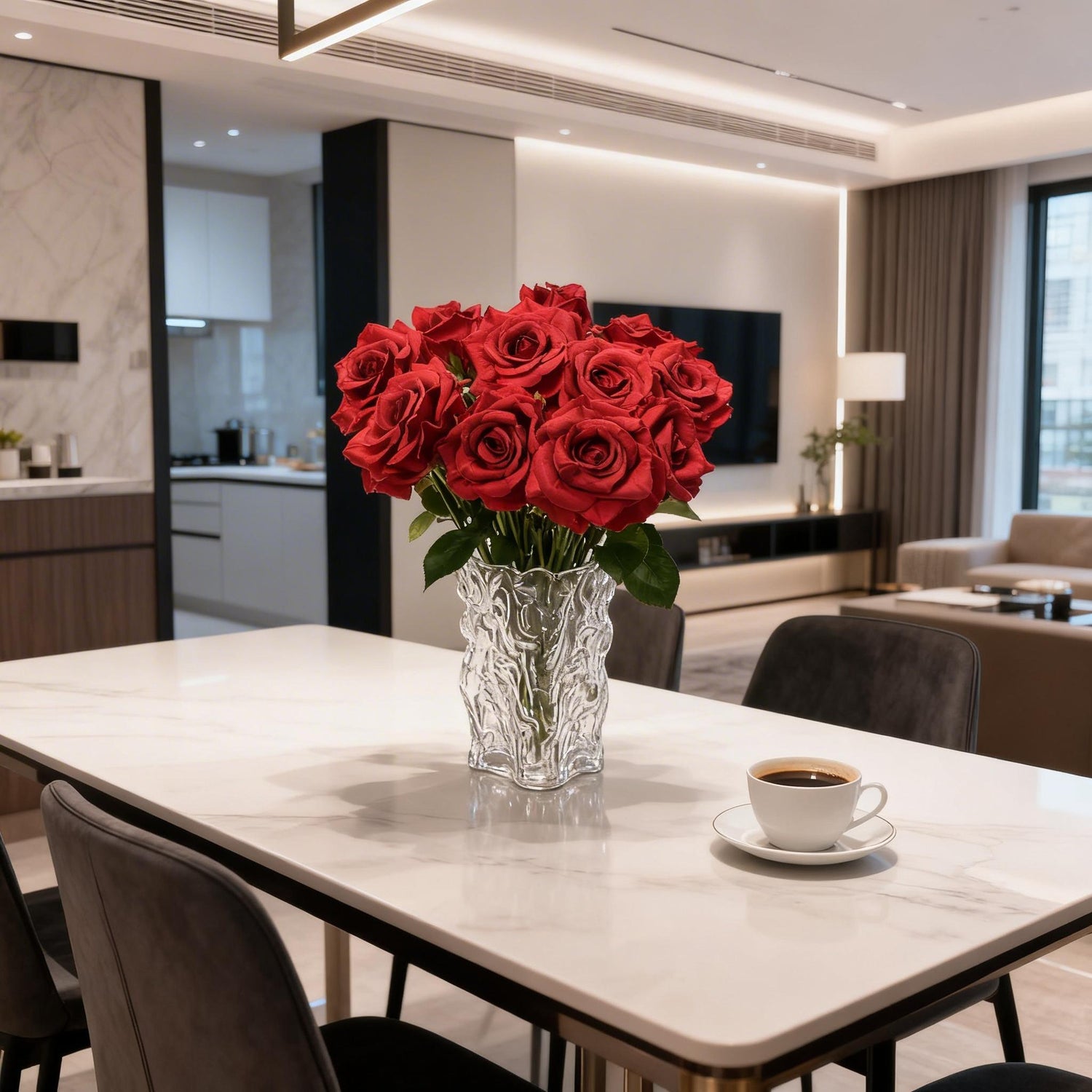
If you are wondering how many roses are in a bridal bouquet, a useful starting range is 18 to 30 standard rose stems for a medium, rose-focused design. A petite posy may use 10 to 15 roses, while a large round bouquet or cascade can require 25 to 45. The right number depends on bloom size, spacing, greenery, bouquet shape, and how the flowers look beside the dress.
Use the guide below to choose a realistic starting quantity, then build one test bouquet before ordering every stem. For ready-to-style options, browse the Silvanest Wedding collection, shop Artificial Flowers, or start with the Artificial Silk Rose Bouquet in 6- or 12-piece sets.
Quick Answer: Rose Stem Counts by Bridal Bouquet Shape
| Bouquet shape | Planning range | Best for |
|---|---|---|
| Petite posy | 10-15 standard roses | Courthouse weddings, flower girls, petite frames, or detailed dresses |
| Small round bouquet | 15-18 standard roses | Compact, controlled shape with limited greenery |
| Classic medium round bouquet | 18-24 standard roses | Traditional bridal proportions and balanced front-facing photos |
| Large or lush round bouquet | 25-36 standard roses | Ball gowns, formal venues, and a fuller floral focal point |
| Cascade bouquet | 30-45 roses plus structure and greenery | Aisle entrances, full-length portraits, and a visible floral drop |
| Mixed bridal bouquet | 8-15 roses plus secondary flowers and greenery | Garden-style designs where roses are focal flowers rather than the entire bouquet |
These numbers assume standard single-bloom roses. Spray roses carry several smaller flowers on one stem, while larger garden-style blooms can create more volume with fewer stems. Count visible bloom volume, not only the number of cut stems.
Why Two Bouquets With 18 Roses Can Look Different
Bloom diameter changes the coverage
A larger rose head covers more visual space. The Silvanest 6-piece artificial rose set combines four blooms around 4 inches in diameter with two around 3 inches. The 12-piece set uses nine larger blooms and three smaller blooms. Mixing two bloom sizes helps close visible gaps without making every flower sit at the same height.
Spacing changes the final width
Tightly packed roses create a formal dome and require more stems for a given diameter. A looser hand-tied bouquet uses air, angled stems, and greenery to create width. Decide whether you want a polished round outline or a relaxed garden shape before calculating quantity.
Filler flowers and greenery replace some rose volume
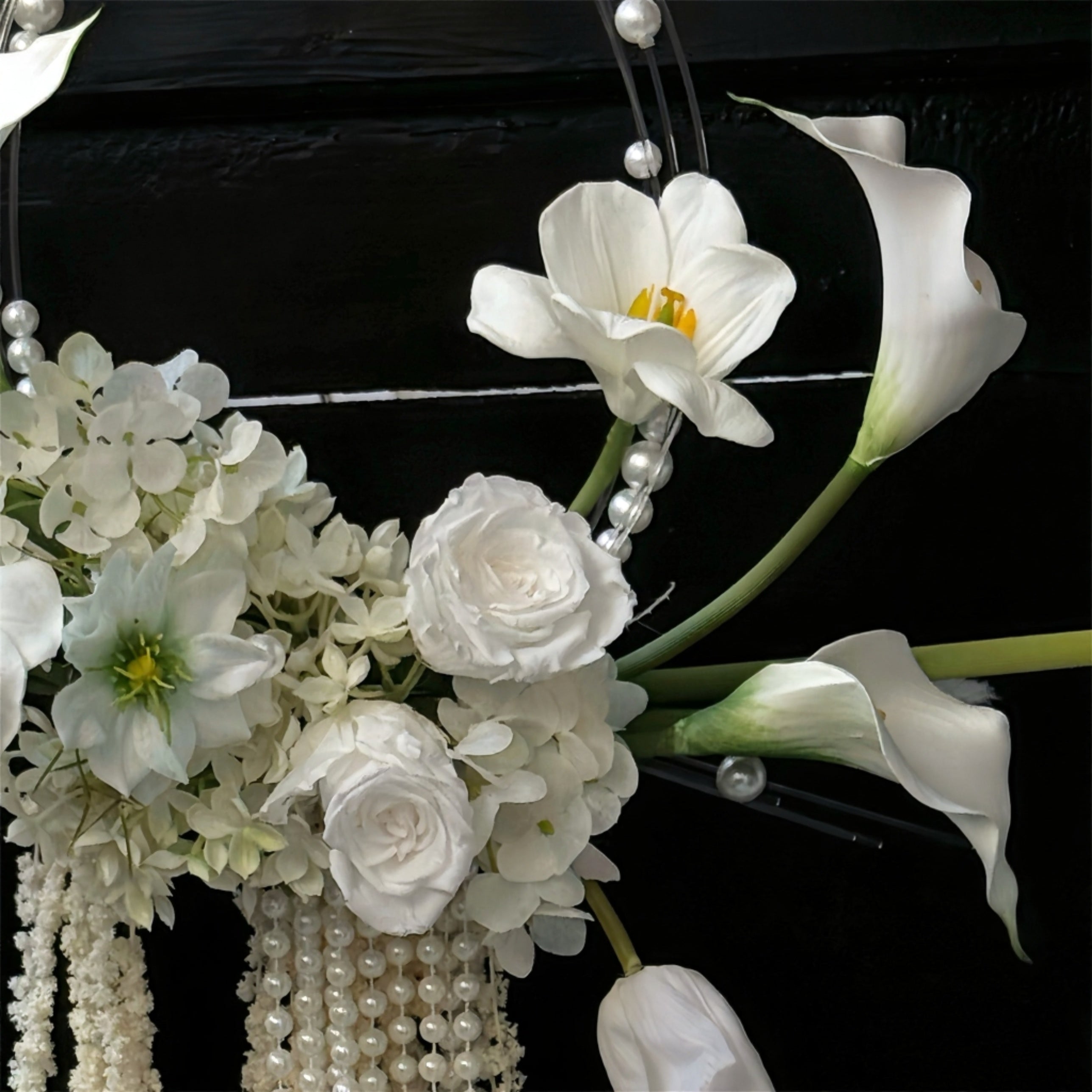
If roses are the only visible flower, stay near the higher end of the range. If you add calla lilies, peonies, orchids, eucalyptus, or other secondary elements, roses can become the focal layer instead of the entire bouquet. Keep the palette controlled so the design does not become visually crowded.
The bouquet must work with the dress and the person carrying it
A bouquet should not hide the waist, bodice, sleeves, or important dress details. Hold a test arrangement at your natural walking height and take one front photo and one side photo. A bouquet that looks moderate on a worktable may appear much larger against a narrow dress silhouette.
How to Use Silvanest 6- and 12-Piece Rose Sets
The Silvanest Artificial Silk Rose Bouquet is sold in 6- and 12-piece options. That makes it easier to build common planning quantities without buying unrelated stems.
| Target rose count | Set combination | Likely use |
|---|---|---|
| 6 roses | One 6-piece set | Rose accents in a mixed bouquet, a small vase, or detail photos |
| 12 roses | One 12-piece set | A compact rose bouquet or the focal layer of a mixed bridal bouquet |
| 18 roses | One 12-piece set plus one 6-piece set | A small-to-medium round bouquet |
| 24 roses | Two 12-piece sets | A classic medium round bouquet |
| 30 roses | Two 12-piece sets plus one 6-piece set | A fuller bouquet or the base of a cascade design |
These combinations describe the number of artificial rose pieces, not a guaranteed finished diameter. Build the bouquet before trimming or permanently wrapping the stems, then add or remove roses in two- or three-stem increments.
How Many Roses for a Round Bridal Bouquet?
For a classic round bridal bouquet, start with 18 to 24 standard roses. Place one focal bloom near the center, build an even ring around it, then rotate the bouquet as you add each layer. The goal is an even outline without forcing every bloom to the same height.
Use 15 to 18 roses when you want a compact bouquet with a visible handle and minimal greenery. Move toward 24 to 30 when the blooms are smaller, the bouquet must read clearly in full-length photos, or the dress and venue can support more volume.
How Many Roses for a Hand-Tied or Garden-Style Bouquet?
A hand-tied bouquet can use 12 to 20 roses when greenery and secondary flowers provide part of the shape. Angle several stems outward instead of packing them into a tight dome. Vary the bloom height slightly so the bouquet looks arranged rather than molded.
For a mixed bouquet, choose the rose count first, then add secondary flowers in small groups. Stop when the roses still read as the focal flower. If every open space receives a different bloom, the original rose color may disappear in photos.
How Many Roses for a Cascade Bridal Bouquet?
A rose-focused cascade often needs 30 to 45 roses because the design must create both width near the hands and a visible drop below them. The lower section also needs secure mechanics; adding more flowers cannot correct a weak frame.
Build the upper bouquet first, then add the trailing section. Photograph the bouquet at full length before increasing the drop. A cascade that is too long can cover dress details and become tiring to carry. Brides comparing finished cascade shapes can also explore Silvanest artificial wedding bouquets.
Artificial Roses vs. Fresh Roses: Does the Count Change?
The visual calculation is similar: bloom diameter, spacing, greenery, and shape still determine fullness. Artificial roses can be assembled earlier, photographed with the dress, adjusted over several sessions, and saved after the ceremony. They do not provide natural rose fragrance, so decide whether scent is important to your wedding experience.
Do not trim every stem at the beginning. Build the complete shape, mark the final handle length, test the weight, and only then finish the ribbon or wrap. Keep the bouquet supported during transport so the outside blooms are not flattened.
Build One Test Bouquet Before Ordering the Wedding Party
- Choose the intended shape: petite, round, hand-tied, mixed, or cascade.
- Start at the lower end of the recommended rose range.
- Add greenery or secondary flowers before deciding that more roses are necessary.
- Hold the bouquet at waist height and photograph it from the front and side.
- Check the bouquet beside the actual dress color in daylight and indoor lighting.
- Add or remove two to three roses at a time until the shape feels balanced.
- Record the final recipe before building bridesmaid bouquets or table flowers.
Do not reuse the bridal bouquet count for every arrangement. A bridesmaid bouquet is usually smaller, and a centerpiece depends on vessel width and viewing height. For table calculations, use the separate guide to how many artificial flowers you need for a wedding centerpiece.
Plan Roses Beyond the Bridal Bouquet
Repeat the rose color in selected ceremony areas rather than placing the same density everywhere. A few rose stems can connect the bridal bouquet to welcome-table vases, while a longer floral line works better on an arch or backdrop. The 6.5 ft White Rose Garland carries nine white roses along a vine for arches, stair rails, backdrops, and table edges.
For additional vase and reception ideas, read Artificial Roses for Home Decor and Wedding Centerpieces. Keep the bridal bouquet as the strongest rose focal point, then use lighter repetition around the venue.
Frequently Asked Questions
Do 12 roses make a bridal bouquet?
Yes. Twelve standard roses can make a compact bouquet or serve as the focal layer in a mixed bouquet. For a fuller medium round shape, start closer to 18 to 24 roses.
Are 24 roses enough for a wedding bouquet?
Twenty-four standard roses are a practical starting point for a medium round bridal bouquet. Large blooms, greenery, and looser spacing may make 24 look fuller; a tight dome or cascade may require more.
How many artificial roses should I buy for a bridal bouquet?
Use the same visual planning ranges as fresh roses, then assemble a test bouquet early. For the Silvanest 6- and 12-piece options, combine one 12-piece set with one 6-piece set for 18 roses or use two 12-piece sets for 24 roses.
Does a cascade bouquet need more roses?
Usually yes. A cascade must fill the area near the hands and create a visible lower section, so a rose-focused design may use approximately 30 to 45 roses plus greenery and secure support.
Should I order extra roses?
A small reserve helps when you change the shape, damage a stem during assembly, or need matching flowers for detail photos. For fresh flowers, many quantity guides suggest a buffer around 10 percent. With artificial sets, an extra 6-piece option can provide adjustment room and coordinated accent stems.
Shop Artificial Roses for Wedding Flowers
Start with the Silvanest Artificial Silk Rose Bouquet in red or white and choose a 6- or 12-piece option based on your test-bouquet plan. Then shop Silvanest wedding flowers, explore Silvanest artificial flowers, or add a White Rose Garland to carry the floral palette into the ceremony and reception.


Dejar un comentario
Este sitio está protegido por hCaptcha y se aplican la Política de privacidad de hCaptcha y los Términos del servicio.