
Most wedding centerpieces use 5 to 18 artificial flower stems, but the right number depends more on the vase opening, flower size, greenery, and viewing angle than on table size alone. A narrow bud vase may need only one to three stems, while a large low arrangement can take 18 to 30 stems. The most reliable way to order is to build one complete sample, count every stem in it, and then multiply by the number of tables.
This guide gives practical starting ranges for artificial flower centerpieces and shows where to add or subtract stems. Use it before shopping the Silvanest Wedding collection or browsing individual stems in the Artificial Flowers collection.
Wedding Centerpiece Flower Count by Vase Size
Start with the vase opening, not its total height. A wide opening needs more stems to hide gaps and hold a balanced shape. A narrow neck naturally gathers stems and can look finished with fewer flowers.
| Centerpiece style | Starting flower count | Best use |
|---|---|---|
| Bud vase | 1-3 stems | Cocktail tables, mixed bud-vase groups, long banquet tables |
| Small or narrow vase | 5-9 stems | Simple round tables, side tables, welcome-table accents |
| Medium centerpiece | 10-18 stems | Most guest tables and compact compote arrangements |
| Large low centerpiece | 18-30 stems | Wide dining tables and fuller focal arrangements |
| Statement urn | 25-40+ stems | Entry displays, ceremony accents, sweetheart-table backdrops |
These are planning ranges, not fixed recipes. Large blooms occupy more visual space than small filler flowers, and greenery can reduce the number of flower heads needed. View the finished sample from every guest-facing side before finalizing the count.
What Changes the Number of Artificial Flowers You Need?
1. Flower head size
Calla lilies, roses, peonies, and branching blossoms fill space differently. A single branch with several blossoms contributes more volume than one straight stem with one flower head. Count physical stems for ordering, but judge visual fullness by the number and spread of the blooms.
2. Vase opening and mechanics
A narrow-neck vase supports a small stem count. A bowl, urn, or wide cylinder may need a floral grid, foam alternative, or internal support to keep the same stems from falling outward. If the vessel has a wide opening, test the mechanics before assuming that adding flowers alone will solve the shape.
3. Greenery and filler flowers
Greenery creates the outer line of an arrangement and separates larger blooms. Small filler flowers soften visible gaps. If your design includes both, you can often use fewer focal flowers while keeping a layered look. For a modern all-white centerpiece, leave more negative space rather than packing every gap.
4. One-sided or all-around viewing
A welcome-table arrangement can be fuller at the front and lighter at the back. A guest-table centerpiece is usually seen from every direction, so it needs balanced coverage all around. The same vase may require several more stems for an all-around design.
5. Desired shape
A loose garden-style arrangement needs varied heights and enough lateral spread. A compact dome needs more evenly spaced flower heads. A tall linear design can use fewer stems if each stem has a clear role in the silhouette.
How to Calculate the Total for Your Wedding
Use this simple process before placing a full order:
- Choose the exact vase or container.
- Build one complete sample with the flower types and greenery you plan to use.
- Count focal flowers, secondary flowers, filler stems, and greenery separately.
- Photograph the sample from the front, side, and seated eye level.
- Multiply each stem category by the number of centerpieces.
- Add a small reserve for damaged pieces, last-minute tables, and venue changes.
For example, ten guest tables using 12 flower stems each require 120 flower stems before any reserve. If every table also uses four greenery stems, order those separately rather than treating the full 16-stem arrangement as one interchangeable count.
Three Practical Artificial Flower Centerpiece Recipes
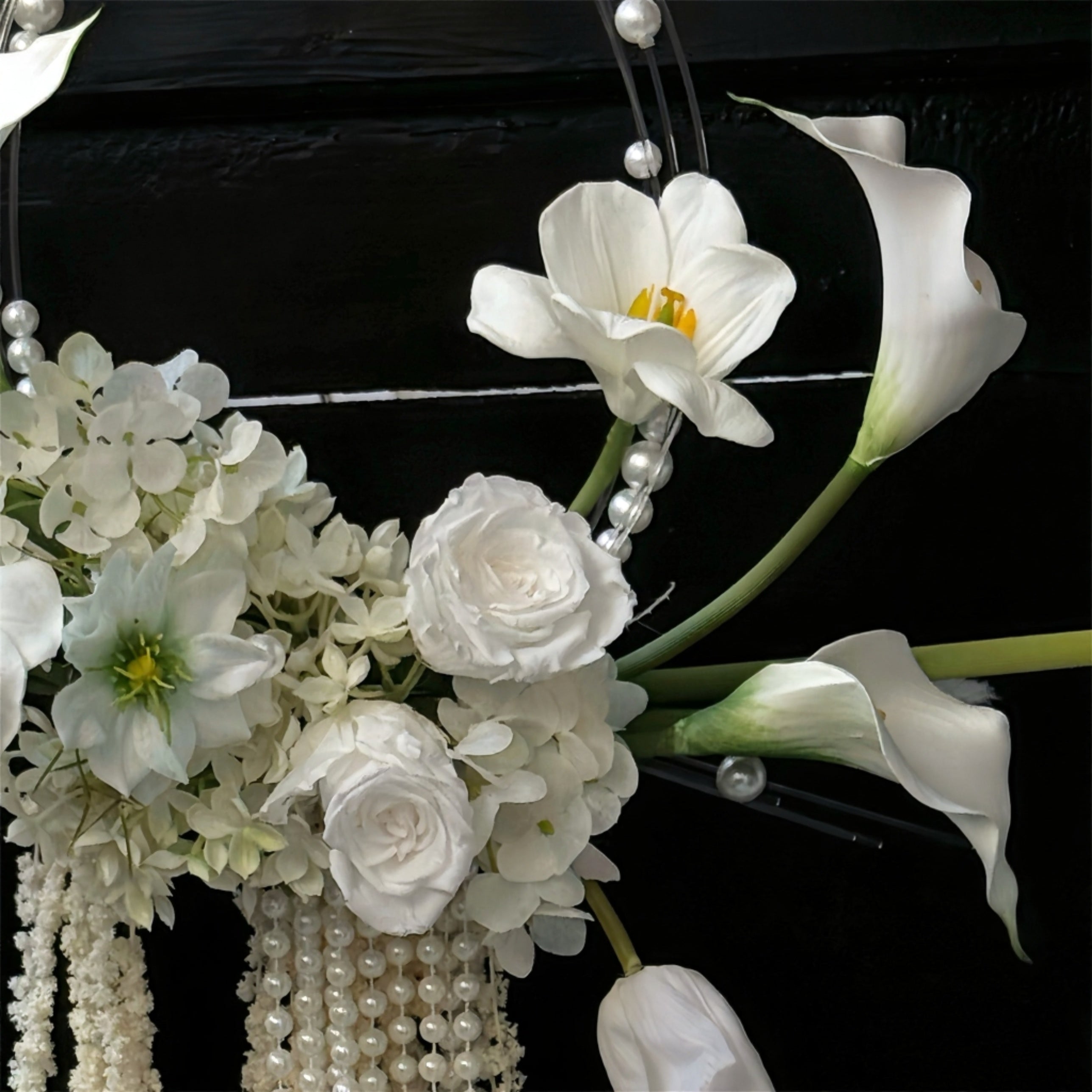
Simple white calla lily vase: 7-11 stems
Use a narrow or medium vase and stagger the stems instead of cutting every flower to the same height. Seven stems create an airy silhouette; nine to eleven give a fuller look. The White Artificial Calla Lily Stems are offered in 10, 20, or 30-piece sets, which makes them useful for sample-building and coordinated small arrangements.
Classic rose centerpiece: 9-15 stems
For a medium vase, begin with an odd-numbered grouping and turn the arrangement as you work. Place the best-facing rose heads around the outer edge, then fill the center. Browse the Artificial Silk Rose Bouquet when planning a traditional rose-led table design.
Branching blossom arrangement: 5-9 branches
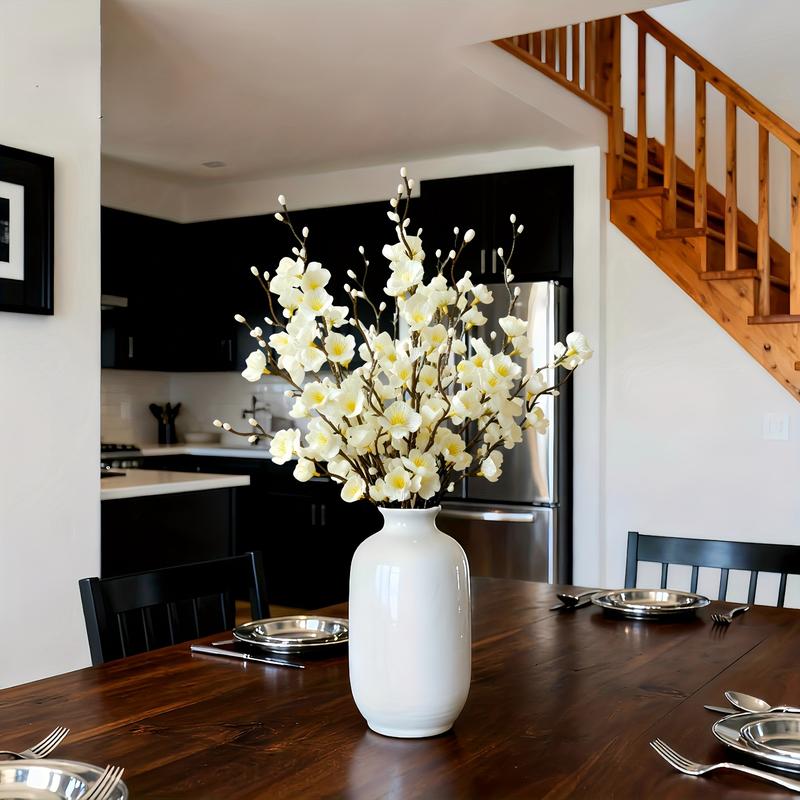
Branching flowers spread farther than single blooms, so fewer physical stems can create height and width. Start with three branches to establish the outline, then add pairs where the arrangement looks thin. The Artificial White Plum Blossom Branches suit taller, looser centerpieces and can also be divided among several bud vases.
How Many Extra Stems Should You Order?
A modest reserve is more useful than buying a large unplanned surplus. For a repeated table design, add enough spare stems to rebuild one centerpiece or correct several small gaps. The right reserve depends on order size, transport, and whether the same flowers are used elsewhere at the venue.
Keep the spare stems in their original packaging until setup day. If the sample design changes, update the count before ordering the balance rather than relying on the first estimate.
How to Make the Final Centerpiece Look Intentional
- Vary stem heights in small increments instead of creating a flat top.
- Turn the vase after every few stems to check the all-around shape.
- Repeat colors and flower types, but avoid placing identical blooms in a rigid row.
- Keep low guest-table arrangements below the main sightline, or make tall designs clearly above it.
- Finish one sample at the venue or on a table of similar size before preparing every centerpiece.
For more detailed mechanics and proportion guidance, read How to Arrange Artificial Flowers in a Vase.
Frequently Asked Questions
How many artificial flowers are needed for a small wedding centerpiece?
A small or narrow vase usually starts with five to nine flower stems. Use fewer when the flowers are large or branching, and more when the vase opening is wide or the design must look full from every side.
How many stems fit in a bud vase?
Most bud vases need one to three stems. A group of several bud vases can combine different flower types while keeping each individual vase simple.
Do artificial wedding flowers need greenery?
No. Greenery can add width, texture, and separation, but an all-flower arrangement can work when the silhouette and spacing are intentional. White calla lilies, for example, can look clean and modern without added foliage.
Should every wedding centerpiece be identical?
The stem count and overall scale should be consistent, but small variations in height and flower placement usually look more natural. Use one approved sample and a short photo checklist to keep multiple arrangements coordinated.
Can I mix artificial flowers with fresh greenery?
Yes, but fresh greenery has different water, storage, and setup needs. Test the combination in the actual container so moisture does not contact materials that should remain dry.
Shop Related Wedding Flowers
Build and photograph one sample before ordering every table. Then shop Silvanest wedding flowers or explore Silvanest artificial flowers to compare stem shape, color, quantity, and arrangement style.

Dejar un comentario
Este sitio está protegido por hCaptcha y se aplican la Política de privacidad de hCaptcha y los Términos del servicio.